

How PhysioSense Turns Waveforms Into Intelligence
PhysioSense has developed a modular platform for transforming physiological waveforms into interpretable state, trajectories, and decision-ready outputs — spanning bedside monitoring, partner integrations, and enterprise deployments.
PhysioStack Processor
Signal filtering, segmentation, normalization, quality assessment, and feature extraction across supported physiological waveforms.
SensorFusion
Proprietary multimodal signal fusion including alignment, integration, optimization, and generation of higher-value embeddings for downstream models and analytics.
PhysioState Interpreter
Patent-pending models transform waveform behavior into interpretable physiological proxies and mechanistic state descriptors.
PhysioInsight
Converts physiologic state into explainable trends, trajectories, response signatures, alerting logic, and analytics-ready outputs.
PulseVu
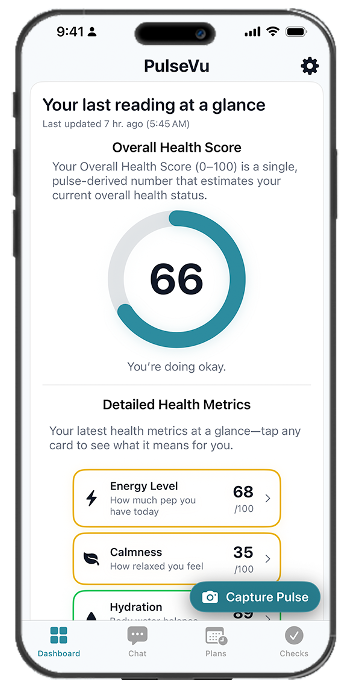
PulseVu transforms a simple pulse reading into clear health insights, guided checks, and personalized next steps for everyday monitoring.
Vascular Radar
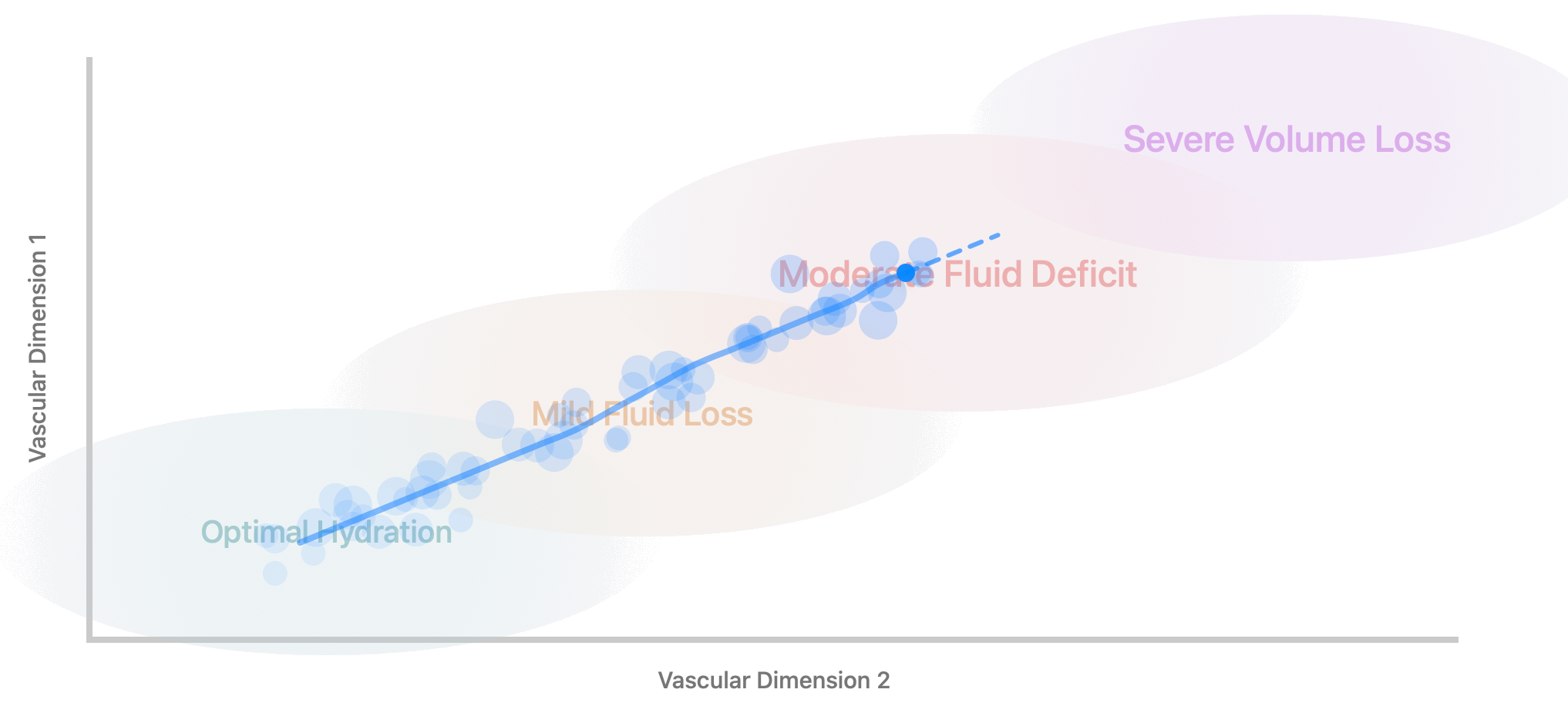
Interactive visual experiences that translate physiological state and change over time into intuitive maps, trajectories, and monitoring views.
Platform APIs and SDKs connect PhysioSense outputs to partner platforms, analytics workflows, EHR systems, and connected devices.
From Smartphone to Clinical Platform
The same foundational waveform science powers both an enterprise-deployed member engagement platform and an advanced clinical monitoring app — demonstrating the full deployment range of PhysioSense technology.
PulseVu
A 30-second smartphone pulse reading delivers an enterprise-grade physiological assessment — white-label configurable for payer member engagement, employer wellness, and care management programs.
Vascular Radar
Real-time physiological state visualization for ICU and critical care. Continuous trajectory mapping visualizes a patient’s past, present, and future physiological state—identifying critical shifts before conventional vitals react.
Patent-Pending Innovation
PhysioSense’s patent-pending filings cover its core waveform phenotyping, state estimation, hemodynamic characterization, and visualization methods—supporting a defensible IP position across the physiological signal interpretation space. Additional details are available to qualified partners under NDA.
IP Coverage Areas
The PhysioSense portfolio protects core methods across six distinct technology areas — spanning waveform representation, physiological state modeling, hemodynamic characterization, metabolic assessment, clinical visualization, and signal interpretation. This breadth establishes a defensible competitive moat across the physiological signal intelligence space.
Available to qualified partners. Additional details on patent-pending filings, technical scope, and licensing terms are available under NDA for organizations evaluating strategic partnerships or technology licensing.