

The Signal Has Always Been There. We Decode It.
PhysioSense translates waveform morphology and dynamics into real-time insights across the vascular system and organs.
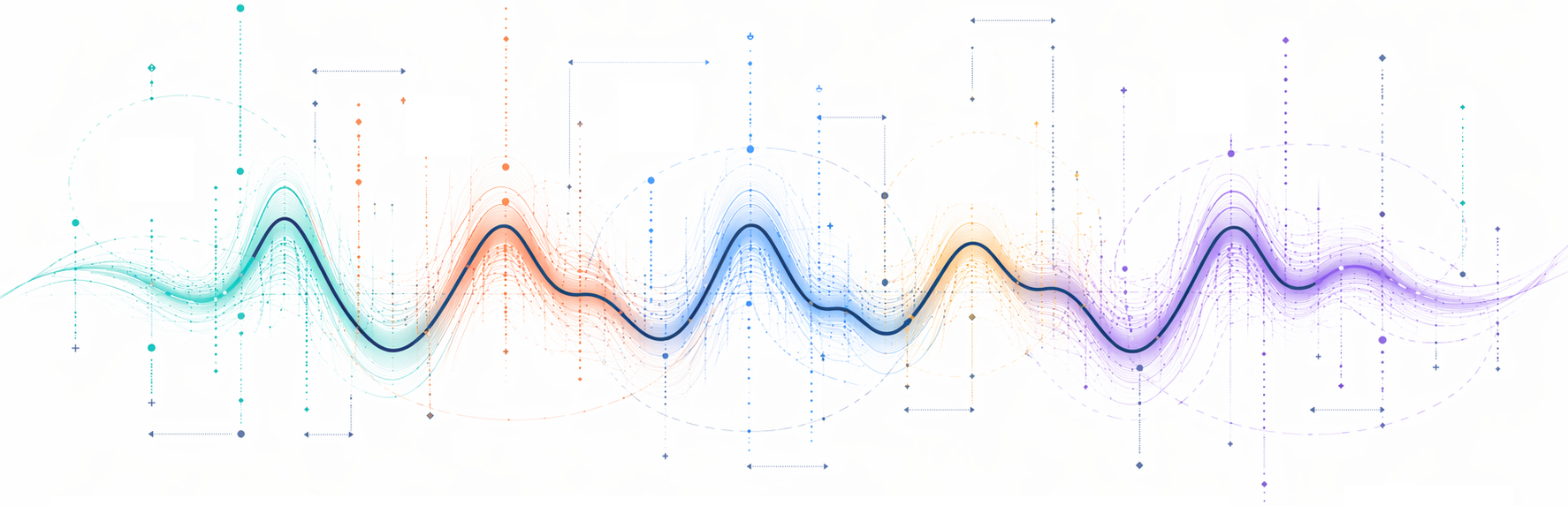
Conventional measurements extract only threshold-level features — heart rate, SpO2. The waveform’s shape carries far more information, with meaningful physiological state encoded in the morphology of every beat.
PhysioSense performs patent-pending kinetic decomposition of the full waveform — extracting mechanistic vascular phenotype descriptors that reflect the underlying state of the arterial system, not learned statistical correlations alone.
These waveform-derived descriptors can also be fused with complementary modalities—including ECG, capnography, and other physiological signals—to support richer multimodal interpretation when available.
- Sepsis & SIRS
- Hemorrhage & hypovolemia
- Shock (septic, hemorrhagic, cardiogenic)
- Traumatic brain injury
- Burns
- Vascular aging
- CHF, CKD, diabetes & metabolic syndrome
- Cognitive decline & neurovascular state
- Cardiopulmonary
- Medication response
- Fluid resuscitation monitoring & titration
- Intervention response signatures
- Physiological recovery & prognosis trajectory
New Ways to Monitor, Track, and Respond
to Physiological Change
PhysioSense works with partner teams to combine deep physiological signal expertise with domain-specific knowledge—creating new monitoring, tracking, and decision-support capabilities that conventional vital signs alone cannot provide.
Remote Member Monitoring — Without New Hardware
A 30-second pulse reading from a smartphone delivers a composite physiological assessment — enabling chronic disease monitoring, vascular risk stratification, and proactive member outreach without requiring clinical visits or additional devices. Deployed across payer member programs, care management, and employer wellness platforms.
See Deterioration Before the Monitor Alarms
Continuous waveform-derived trajectory mapping shows where a patient’s physiology is heading — not just where it is. Vascular state changes surface before they register in conventional vital signs, giving care teams a meaningful window to act before deterioration becomes a crisis requiring emergency response.
Add Physiological Intelligence to What You’re Building
Embed PhysioSense waveform processing and mechanistic outputs into your existing device, platform, or analytics stack — adding a physiological intelligence layer that wasn’t previously available from off-the-shelf sensor data. REST API, physiological embeddings, and native SDK for edge and cloud deployment.
Industries We Serve
The PhysioSense platform is broad enough to serve enterprise, clinical, scientific, and translational partners — while each deployment is tailored to the specific organization’s signals, workflows, and outcomes.
Health Plans
Signal-enabled member programs, risk stratification, and proactive care management — deployed via PulseVu or embedded API.
Learn More →
Pharmaceutical
Mechanistic drug response tracking, study enrichment, patient stratification, and longitudinal physiological phenotyping for clinical programs.
Learn More →
Patient Monitoring
Next-generation waveform interpretation layers and product differentiation for ICU and hospital-grade monitoring systems.
Learn More →
Wearable Companies
Advanced physiological insights extending sensor value beyond standard vitals.
Learn More →
Research & Academia
Translational research models, analytics infrastructure, and collaborative programs for government funded and institutional science efforts.
Learn More →
Defense & Gov’t
Physiological monitoring for operational health, combat casualty care, and non-invasive field-deployable assessment programs.
Learn More →
Built for Collaboration
PhysioSense can engage through multiple partnership models — each tailored to the partner’s product stage, clinical context, and commercialization path. We are the explainable physiology and waveform intelligence layer within your program.
Illustrative ways organizations can work with PhysioSense across payer, clinical development, and device programs.
Deploy PulseVu to support population health initiatives for complex cohorts. Vascular embeddings provide additional context for longitudinal tracking, helping care teams prioritize outreach and support clinical management goals.
Non-invasive physiological phenotyping to enrich clinical trial populations, visualize physiological trends post-administration, and characterize mechanistic shifts in vascular state — particularly where waveform-derived biomarkers add precision.
Embed PhysioSense signal intelligence into existing PPG-capable devices to unlock physiological descriptors beyond heart rate and SpO2 — differentiated features that justify premium positioning and enterprise channel strategies.
Deep Domain Expertise
PhysioSense is led by executives with deep experience spanning physiological signal processing, AI/ML, multimodal sensing, FDA-regulated medical devices, translational research, product strategy, and commercialization.